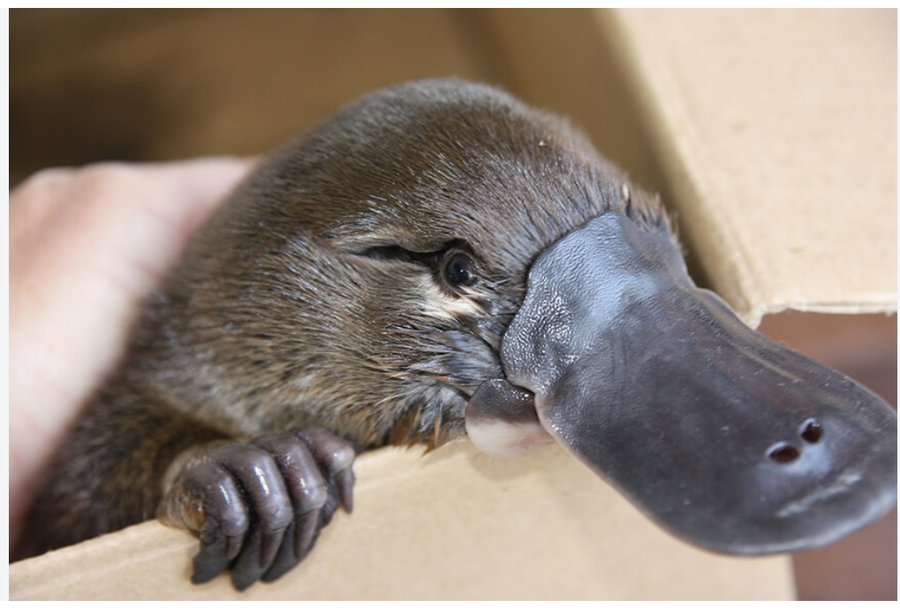
Platypus are well adapted for semi-aquatic lifestyle. Its streamline body and a broad, flat tail are covered with dense waterproof fur, which provides excellent thermal insulation. The Platypus propels itself through the water by using its front, short, webbed limbs, and the partially-webbed hind feet act as rudders. Behind its distinctive bill are the grooves that house the ear openings and the eyes which close when the animal dives. The Platypus uses its tail for storage of fat reserves and the strong claws on its feet for burrowing and moving on land. In addition, males possess a horny spur on their ankles, which is connected to a venom gland in the upper leg, making the Platypus one of the few venomous mammals. Southern populations are larger than northern ones, but also individuals from west-flowing rivers in New South Wales are larger than those found in the state’s east-flowing streams. Similarly, King Island specimens are smaller than those found in Tasmania and Victoria. Males are larger than females and can be over 60 cm long (tip of the bill to tip of the tail). Typically, males are 400-630 mm long, and females are 370-550 mm long. The weight is 800-3000 g for males and 600-1700 g for females. Platypuses are active all year round, but mostly during twilight and in the night. During day, individuals shelter in a short burrow in bank. The activity patterns of these animals are determined by a number of factors including: locality, human activity, ambient temperatures, day length and food availability.
The Platypus